
Preserving
Water-Bath Canning vs. Refrigerator Pickling: Which Method Suits Your Harvest?
September 22, 2026
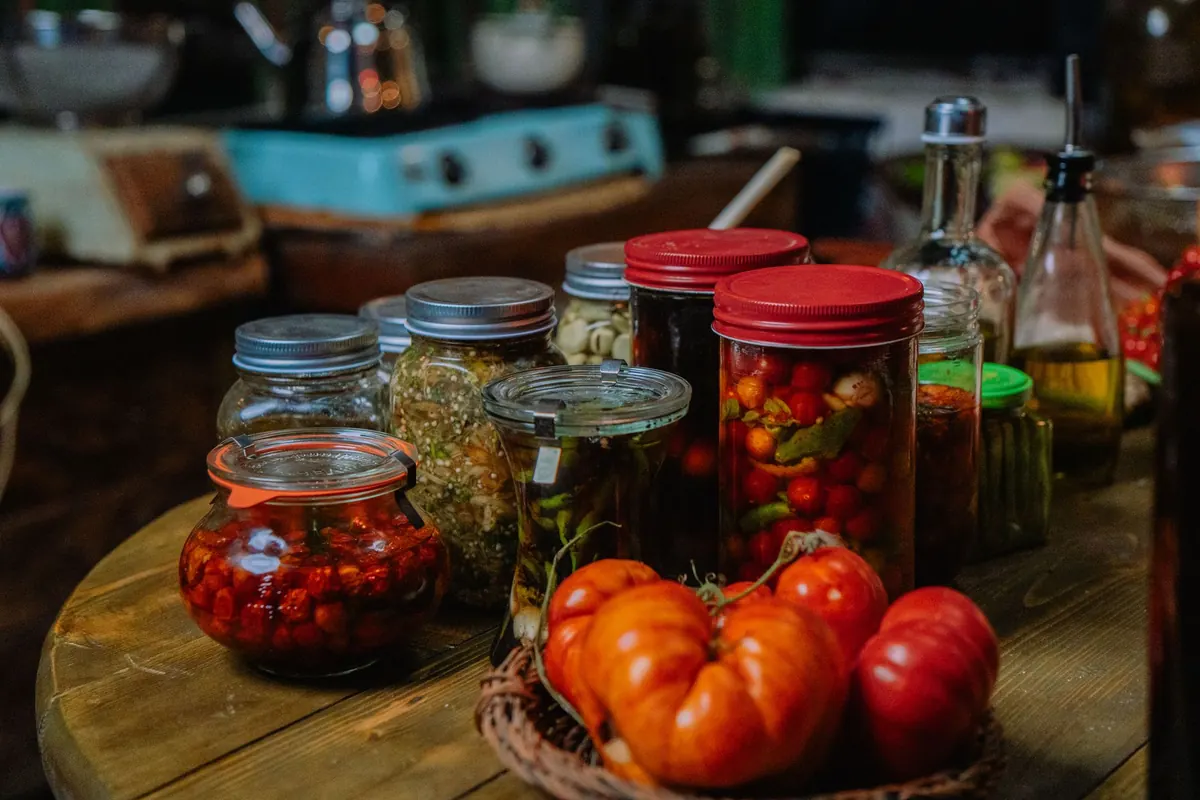
The first real glut of the season is a lovely problem. Ten pounds of cucumbers on the counter, more beans than the two of you can eat, and a decision to make before anything goes soft: haul out the big pot, or clear a shelf in the fridge? Water-bath canning and refrigerator pickling both turn a harvest into something you'll be glad to open in a month, but they ask for very different things — time, equipment, fridge space, and patience for rules.
Neither method is the "better" one. The right choice depends on what you grew, how much of it you have, and how soon you want to eat it.
What Each Method Actually Does
Water-bath canning means packing jars, covering them with water by an inch or two, and boiling them for a set time. The heat drives air out of the jar and knocks back the yeasts and moulds that spoil high-acid food; as the jars cool, the lids pull down into a vacuum seal. The result sits on a shelf at room temperature for a year or more. It only works for high-acid foods: pickles, relishes, chutneys, jams, fruit, and tomatoes with added acid.
Refrigerator pickling is simpler. You make a brine of vinegar, water, salt and often sugar, pour it over prepared vegetables, and put the jar in the fridge. The acid and salt do the preserving, and the cold slows everything else down. Nothing is shelf-stable here. The pickles are decent after a day, good after three, and best in the first few weeks.
Effort and Equipment
Canning has a startup cost in gear and attention. For a first batch you'll want a pot deep enough to cover your jars, a rack to keep them off the bottom, a jar lifter, a wide funnel, and a ladle. You'll also need a tested recipe with processing times and altitude adjustments, and the discipline to follow it. A batch usually takes two to four hours from washing jars to hearing the last lid ping, though most of that is waiting rather than working.
Fridge pickling fits into a lunch break. Here's the whole job:
- Slice or spear the vegetables and pack them into clean jars with garlic, dill, mustard seed or peppercorns.
- Warm vinegar, water, salt and sugar until the salt dissolves.
- Pour the brine over the vegetables, leaving a little headspace.
- Cool, lid, and refrigerate. Eat tomorrow, finish within a few weeks.
Thirty to forty-five minutes, one saucepan, and no special tools. That gap in effort is the single biggest reason people pick fridge pickling for a small harvest.
Safety: Where the Rules Tighten
Water-bath canning earns its reputation for strictness because the stakes are higher — a sealed jar at room temperature is a comfortable place for anything that survived the process. The non-negotiables:
- Use a tested recipe and its stated processing time. Shortening it "because the water was definitely boiling" is how spoilage happens.
- Don't dilute the vinegar or swap in a weaker one. Recipes assume standard-strength vinegar, and the acid level is what makes the method safe.
- Adjust processing time for altitude if you live above sea level. Water boils cooler the higher you go.
- Leave the headspace the recipe specifies, and skip jars with nicked rims — they won't seal properly.
- Remember that low-acid vegetables such as green beans, plain carrots and corn need a pressure canner, not a water bath. No recipe variation changes that.
Fridge pickles are more forgiving because cold storage slows spoilage, but they still need a properly acidic brine and they must stay cold. Keep vegetables covered in liquid, and throw the jar out if you see fuzzy mould, smell something wrong, or the contents turn slimy. Cloudy brine is normal; fur is not. If you're ever unsure whether a jar is safe, bin it. If you're new to preserving, a current university extension guide is a better companion than a random recipe online.
Storage Life and Shelf Space
Properly processed jars keep their quality for about a year in a cool, dark, dry cupboard, and the seal tells you whether the process worked. That's the trade: you spend an afternoon and gain pantry space.
Fridge pickles typically hold for three to four weeks, with texture fading after that. They also occupy prime August real estate. A quart jar of pickles takes the spot where the milk goes, and once you've made six of them, you're rearranging shelves at midnight. If you have one fridge and a big harvest, the honest answer is usually to can most of it and keep two or three jars in the cold for eating now.
Taste and Texture
Heat softens. Canned pickles and relishes come out tender, and they keep softening as they sit — a jar opened in March is noticeably softer than one opened in October. Many cooks trim the blossom end off cucumbers and tuck a grape leaf into each jar for crunch, a traditional trick that helps but doesn't reverse the effect of boiling. What canning does give you is depth: flavours marry, spices mellow, and chutneys and bread-and-butter pickles taste better for the wait.
Fridge pickles stay crisp and taste bright and sharp, closer to the raw vegetable plus vinegar. They're the ones you want on a taco, in a sandwich, or alongside anything rich. They're also the place to play — quick-pickled red onions, jalapeños, radishes and carrot ribbons all shine here. Two quirks worth knowing: garlic can turn blue-green in an acidic brine, which looks alarming but is harmless, and fresh herbs fade, so add more than feels sensible.
Choosing for Your Kitchen
- Small harvest, busy week, one or two plants: fridge pickles.
- A counter piled with cucumbers and no fridge room: water-bath canning.
- Beans, corn, plain carrots, or anything low-acid: pressure canning, not a water bath.
- Jars for gifts or a pantry you want to raid in winter: water-bath canning.
- Pickles you want to eat within a month, crunchy and sharp: the fridge.
- You want to tweak salt or sugar: the fridge, where you have room to adjust, though the vinegar ratio still matters.
A Practical Starting Point
Make one jar of fridge pickles this week, using whatever is glutting: cucumber spears with dill and garlic, or red onions with a pinch of sugar. It costs half an hour and teaches you how a brine tastes, which is the useful instinct for everything that follows. Then, when the harvest is bigger than the fridge, work through a tested canning recipe from start to finish without improvising — once, carefully. Label every jar with the date and what's inside, and keep a note of what you liked.
The best method is the one that gets used. A jar of crisp fridge pickles eaten in three weeks beats a beautiful shelf of jars you're too nervous to open.
Photo: TIVASEE . / Pexels
Related posts
More stories you’ll love reading