
There is a small, satisfying moment when you pour a new bag of flour into a proper container and slide it onto the shelf. Six months later, the flour smells faintly of the cinnamon that used to live in that jar, or you open the oats and find webbing. The container rarely failed because it was glass or plastic. It failed because of how it handled air, light, moisture and pests, and because the lid was doing less work than you assumed. Choosing between the two gets much easier once you know what each material is actually good at.
What you are really fighting
Four things shorten the life of dry goods, and almost every container decision comes down to which of them you are blocking, and how completely.
- Air. Oxygen turns the oils in whole grains, nuts and ground spices stale and eventually rancid. White flour and white rice are far more forgiving than wholemeal anything.
- Moisture. Damp air makes flour clump, salt cake and biscuits go soft. A container that seals well keeps the pantry's humidity out.
- Light. Bright light fades the colour and aroma of spices and speeds up the breakdown of fats. A dark cupboard does most of this work for you.
- Pests. Pantry moths and beetles will chew through a thin plastic bag or a flimsy tub. They do not get through glass, and they rarely get through rigid, thick-walled plastic with a tight lid.
Notice that three of those four are about the seal, not the material. That matters later.
Glass: heavy, breakable, very good at its job
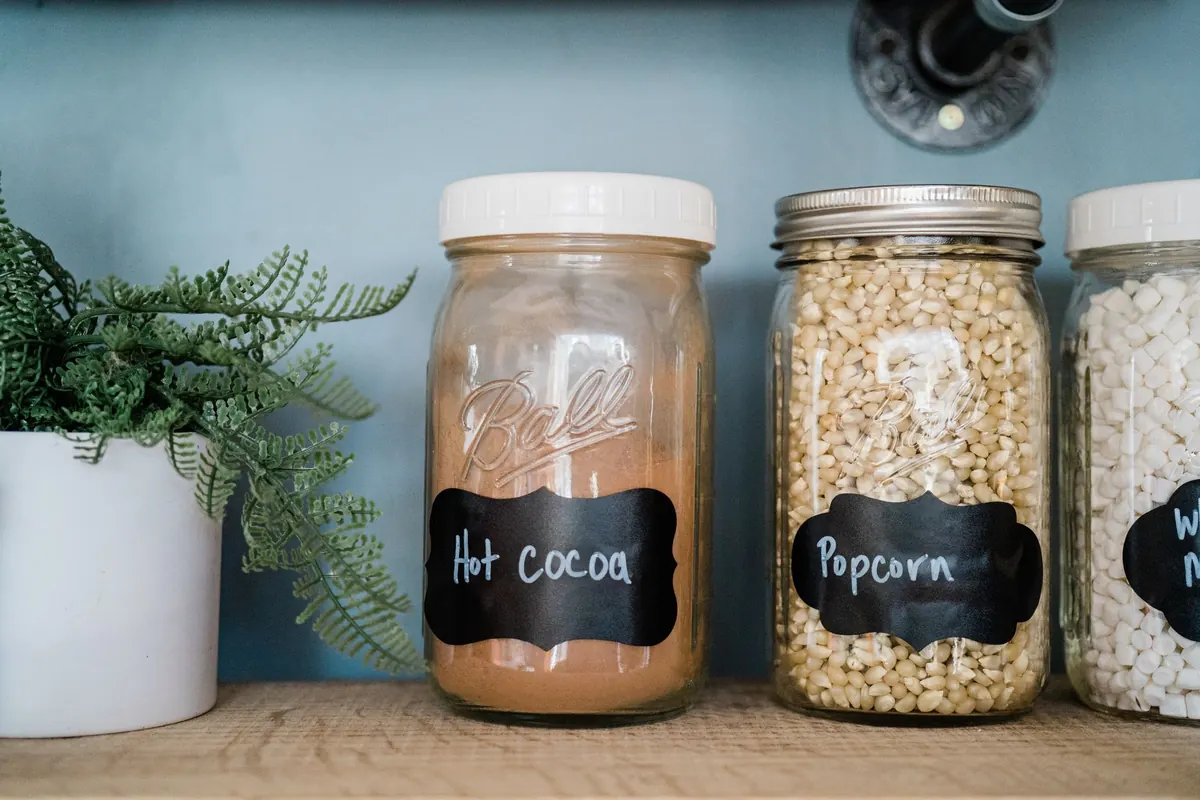
Glass is non-porous, so it does not absorb smells or hold onto stains. A jar that held curry powder last year will not flavour your rice this year once it has been washed. It also does not scratch in a way that traps residue, and it stays clear instead of fogging over, so you can see at a glance how much you have left.
The practical downsides are real. Glass is heavy, it breaks when dropped on a tile floor, and it costs more per litre than plastic unless you are reusing jars you already own. Round jars also waste shelf space — an issue worth taking seriously if your pantry is a single cupboard.
One more thing: the lid is usually the weak point. Metal screw bands rust in humid kitchens, and the rubber or silicone gaskets on clamp jars harden and crack over time. A beautiful glass jar with a tired gasket is no better than a plastic tub.
Plastic: cheap, light, better than its reputation
Plastic wins on the boring criteria. It is inexpensive, so you can buy a matching set for a whole shelf. It is light, which matters if you keep flour in five-kilo batches on a high shelf. It comes in square and rectangular shapes that stack and fit together with almost no wasted space. And it does not shatter.
The trade-offs are odour retention and scratching. Plastic can pick up the smell of whatever it held before — which is why a container that once stored leftovers is a poor choice for flour, no matter how well you wash it. If you are reusing plastic, keep it for dry goods only and retire anything that smells or has deep scratches.
On the safety question, the sensible approach is simple: use containers sold for food storage, follow the manufacturer's guidance on heat and dishwasher use, and avoid putting very hot or oily food into plastic you are unsure about. For dry flour, rice and spices at room temperature, the material is not the main concern. The seal is.
Match the container to the ingredient
Flour and grains
These are bulky, so the container should be square, wide-mouthed and easy to scoop from. A large plastic tub with a gasket lid is the practical choice for white flour you refill every few weeks. Wholemeal flour, brown rice, oats and other whole grains keep noticeably better in glass or thick plastic with a genuinely tight seal, because the oils in the bran and germ are the first thing to go stale.
Spices
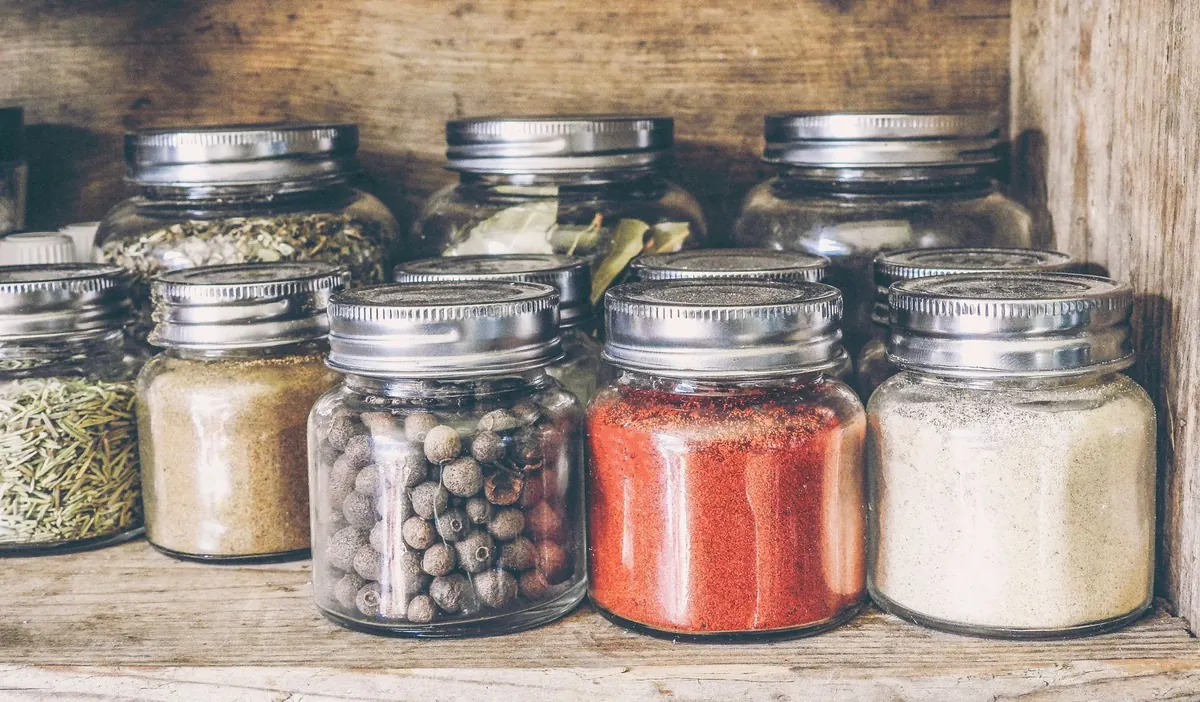
Small glass jars win here. You are storing tiny quantities for a long time, light is the main enemy, and glass does not hold onto strong aromas. Keep them in a dark cupboard rather than on an open rack beside the stove, and buy in amounts you will use within a year or so.
Nuts, seeds and dried fruit
Nuts and seeds are oil-rich, so they go rancid faster than anything else in the pantry. Glass in a cool, dark spot is ideal; a jar in the fridge is better still for longer storage. Dried fruit benefits from the same airtight treatment, mainly to stop it drying out further or clumping.
The lid matters more than the material
Test your containers before you trust them with anything valuable. A lid that lifts away with no resistance is not sealing. Look for a silicone gasket, a screw band, or a clamp mechanism with a rubber ring, and check the ring now and then for cracks.
Mason jars with a flat lid and screw band are about as airtight as home storage gets, and replacement lids are cheap. Clip-top jars are excellent while the gasket is new. Push-on plastic lids vary enormously — some are excellent, some are decorative. And a bag clipped shut is better than nothing, but it will not keep moths out or humidity away for long.
Cost, weight and shelf space
Glass costs more up front and lasts for decades if you do not drop it. Plastic costs less, breaks down over time, and often needs replacing when a lid splits. If budget is tight, a good middle path is to buy glass for small, long-kept, aroma-sensitive things like spices and nuts, and plastic for the big, fast-moving bulk items.
Think about weight before you commit. A large glass jar of flour on a high shelf is awkward and unpleasant to bring down one-handed. And think about footprint: measure the shelf, then buy to fit it, because a mismatched set of round jars will cost you more usable space than any material difference.
A practical mixed pantry
Most well-organised kitchens end up with both, and that is not a compromise — it is the sensible answer.
- Go glass for spices, nuts, seeds, whole grains and anything you keep for months.
- Go plastic for bulk flour, rice, pasta shapes and cereal you refill often.
- Check the seal on every container before it earns a place on the shelf.
- Label with the contents and the date you opened it, especially for anything decanted out of a bag.
- Keep the whole shelf cool, dark and dry, and use the oldest first.
Start with the ingredients that have actually let you down — the flour that went stale, the spices that lost their punch, the oats that brought moths home. Buy for those first, add the rest as you go, and you will end up with a pantry that works rather than one that merely matches.
Photo: monicore / Pexels
Related posts
More stories you’ll love reading