
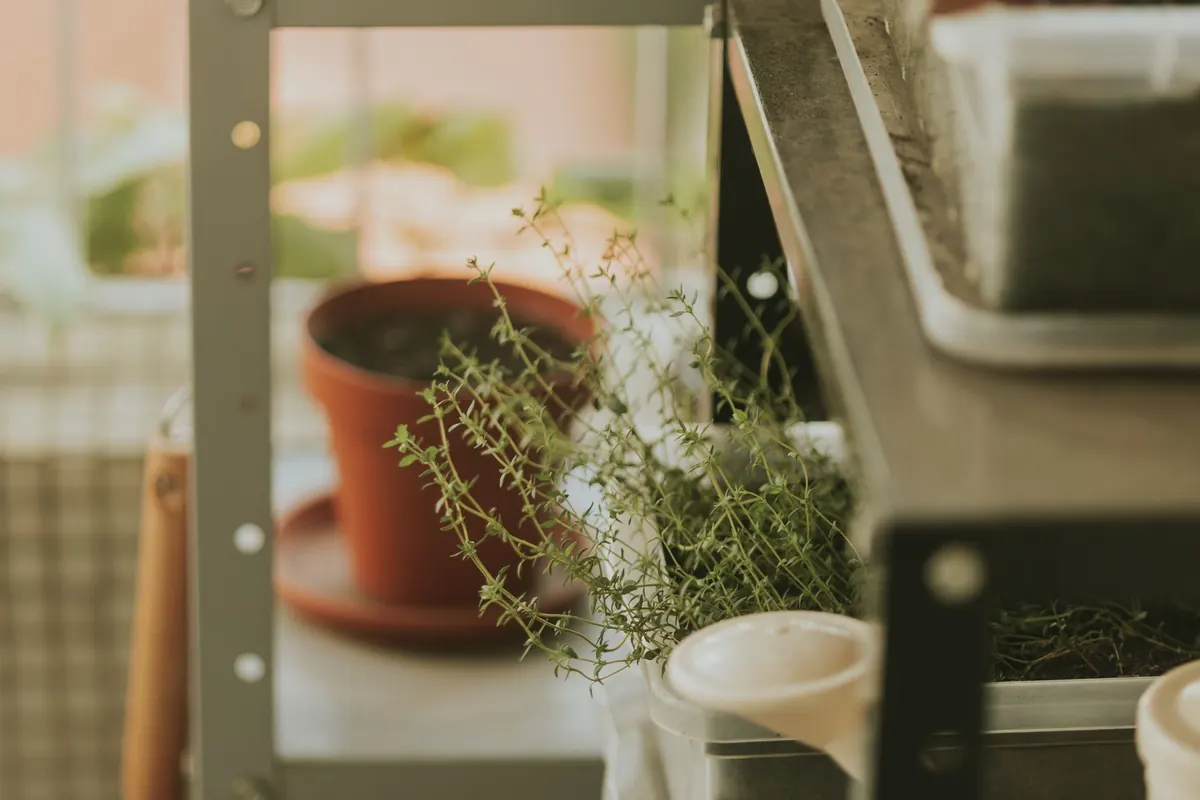
The first winter I tried to keep basil on a north-facing kitchen sill, it ended as a pale stalk with three leaves by January. The parsley beside it sailed through. That difference taught me more than any book about indoor herbs: a windowsill is a specific environment, not a generic one, and the plants you choose need to match the light you actually have. Get that pairing right and you can be cutting thyme, mint and chives in February without a grow light or a greenhouse.
Choose herbs that forgive a windowsill
Not every herb wants to live indoors. The ones that do best cope with lower light, drier air and the occasional forgotten watering.
The dependable ones
- Mint — nearly unkillable, happy in partial shade, and generous. Keep it in its own pot; it runs.
- Chives — fine on a bright sill, regrows after cutting, and a clump lasts for years if divided.
- Flat-leaf parsley — slow but steady, tolerates less light than most, and keeps producing outer stems all winter.
- Thyme and oregano — compact, drought-tolerant, and their flavour intensifies when grown a little hard.
- Basil — thrives with four to six hours of direct sun and warmth; sulks without it.
- Coriander — fast and useful, but short-lived. Sow a small pinch every three weeks rather than expecting one plant to last.
The ones that will fight you
Rosemary, lavender, tarragon and bay want far more light and far drier air than a typical kitchen offers. Rosemary in particular resents humid rooms and wet roots. They can be done, but they belong on a very bright, cool sill, and they will test your patience.
Light decides everything
A south-facing sill gives the most hours and the strongest light; east is next best; west is workable in summer; north is a genuine handicap. Leafy herbs such as mint, parsley and chives manage on an east sill. Basil, thyme and oregano want the sunniest spot you have. Three habits make a real difference:
- Get them close to the glass. Light falls off sharply with distance. A plant 30cm back from the window receives a fraction of what one touching the pane gets.
- Turn each pot a quarter turn every week. Otherwise plants lean hard towards the light and grow lopsided and leggy.
- Bounce light back. A sheet of white card or foil behind the pots sends light through the leaves from both sides.
Wipe the inside of the window in autumn. Grime and condensation steal light exactly when the days are shortening and every hour counts.
Pots, compost and drainage
Size matters more than material. A supermarket basil crammed into a 9cm pot will stall; the same plant in a 15cm pot with room for its roots keeps cropping for months. Terracotta dries out faster, which suits thyme and oregano; plastic holds moisture longer, which suits mint and parsley.
Every pot needs drainage holes and a saucer, and nothing should stand in water for more than an hour. A peat-free multipurpose compost works for leafy herbs; for Mediterranean herbs, stir in a couple of handfuls of grit or perlite so water runs through rather than sitting around the roots.
Don't leave a new supermarket pot as it is. Those pots hold dozens of seedlings competing for the same crumbs of compost. Split the clump into two or three pots, water them in, and give them a week out of direct sun to settle.
Watering and feeding without drowning them
More indoor herbs die of kindness than neglect. Push a finger into the compost: if it's dry 2cm down, water; if it's damp, wait. Lifting the pot tells you the same thing once you know its weight. Water in the morning so surplus drains before the cooler night, and empty the saucer afterwards.
Feed lightly. Leafy herbs such as basil and parsley appreciate a weak liquid feed every fortnight from spring to early autumn. Thyme, oregano and rosemary need very little. Overfeeding produces soft, floppy growth with washed-out flavour, which is the opposite of what you're growing them for.
Cut little and often. A herb that's trimmed regularly stays compact and bushy; one that's stripped bare takes weeks to recover.
Harvest in a way that keeps them growing
Always cut just above a pair of leaves, never into bare woody stem. That pair of leaves is where new shoots come from. Take no more than a third of the plant at once, and rotate which stems you cut.
- Basil: pinch the growing tips and remove flower buds the moment they appear — once basil flowers, the leaves turn harsh.
- Chives: snip outer leaves down to about 3cm and leave the centre to push up new growth.
- Parsley: harvest outer stems at the base, leaving the young centre untouched.
- Thyme and oregano: take the soft top growth, and never cut back into old wood.
- Mint: cut whole stems near the base; it comes back thicker.
Keeping the harvest going through winter
Winter is where windowsill herbs are won or lost. Daylight is short, indoor air is dry, and the glass itself gets cold at night. Move pots out of reach of radiators but keep them as close to the brightest window as you can, and water less — growth slows, so the roots need far less. Stop feeding until you see fresh growth in late winter. Leaves pressed against cold glass can blacken overnight, so slide pots back a few centimetres on frosty evenings or draw a curtain between plant and window.
The best insurance is taken in late summer. In August or early September, root cuttings of basil and mint in a glass of water on the sill and pot them up once roots appear; young plants handle the dark months far better than exhausted year-old ones. Tired plants can be cut back hard, top-dressed with fresh compost, and given a chance to start again in February.
Watch for aphids, whitefly and tiny fungus gnats rising from wet compost. Check the undersides of leaves weekly, isolate any affected pot, rinse the foliage under a lukewarm tap, and let the top of the compost dry between waterings. Airflow matters too — a crowded sill is a breeding ground for mould.
A five-minute weekly routine
One short check keeps everything on track:
- Test the compost in every pot with a finger and water only what needs it.
- Turn each pot a quarter turn.
- Pinch off yellowing leaves, flower buds and any stem that has stretched.
- Look under the leaves for pests.
- Cut whatever you need for that evening's cooking.
Start with two pots rather than eight. Pick one easy herb and one you'll actually use — mint and basil, or parsley and thyme — and give them the brightest sill in the house. Master those, then add a third next season. A windowsill garden isn't about abundance; it's about the handful of fresh leaves that turns an ordinary dinner into a better one, in January as much as July.
Photo: Letícia Alvares / Pexels
Related posts
More stories you’ll love reading